

“Trying for your wine is a special reward for itself, but it has also been very interesting to know the vineyards and the special people who work.”
These words by Noah Gordon, the acclaimed author of The Physician, weren’t just a polite tribute. To write his masterpiece La Bodega, Gordon immersed himself in the rolling hills of the Penedès, walking the limestone soils and breathing the Mediterranean air. He understood that this region is not just a factory for liquid gold; it is a living tapestry of history, resilience, and a deep-seated love for the land.
Located just south of Barcelona, tucked between the coastal Garraf Massif and the jagged peaks of Montserrat, the Penedès is the beating heart of Catalan viticulture. Whether you are a casual sipper or a dedicated oenophile, this region offers a sensory journey through time.
A Landscape Forged by History
The story of the Penedès is one of adaptation. While the Romans were the first to scale up production—sending amphorae of wine across the Empire via the nearby Via Augusta—the region’s modern identity was forged in the fire of crisis.
In the late 19th century, the Phylloxera plague devastated European vineyards. While many regions gave up, the growers of the Penedès pivoted. They replaced their red vines with white varieties like Xarel·lo, Macabeu, and Parellada, giving birth to the sparkling revolution we now know as Cava (and more recently, Corpinnat and Classic Penedès).
Today, the region is a leader in organic and biodynamic farming, proving that respect for the past and vision for the future can go hand in hand.
The Guardians of the Land: Four Essential Estates
To truly understand the “special people” Noah Gordon referred to, one must visit the cellars where tradition meets innovation. Here are four estates that define the excellence of the Penedès:
1. Albet i Noya: The Pioneers
If the Penedès is a global leader in organic wine, it is largely thanks to Albet i Noya. In 1978, they became the first in Spain to dedicate themselves entirely to organic farming.
-
The Vibe: Modernity rooted in environmental ethics.
-
The Highlight: Their work in “forgotten varieties,” recovering grapes that disappeared after the Phylloxera, is a fascinating bridge to the region’s pre-industrial past.

2. Rovellats: A Step Back in Time
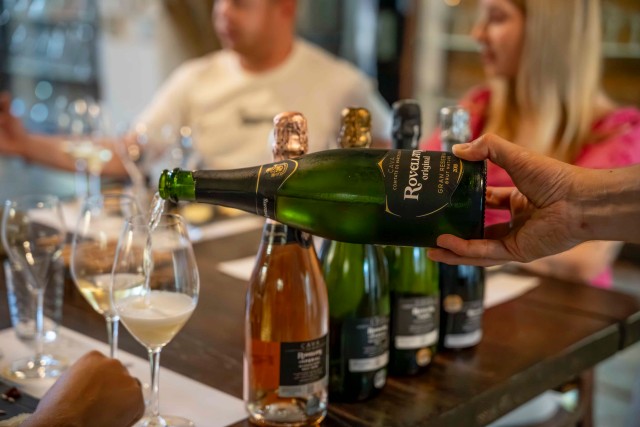
Entering Rovellats is like walking into a historical novel. This family-run estate features a stunning modernist winery and a unique radial cellar located 12 meters underground.
-
The Vibe: Elegance, heritage, and “Small is Beautiful.”
-
The Highlight: Their long-aged sparkling wines. The coolness of their deep cellars allows for a slow, graceful maturation that results in incredible complexity.

3. Llopart: Views from the Balcony
Located in Subirats, Llopart offers some of the most breathtaking views of the Montserrat mountain range. As one of the founding members of Corpinnat, they represent the pinnacle of sparkling wine quality.
-
The Vibe: Prestigious, panoramic, and deeply artisanal.
-
The Highlight: The Ex Vite vineyard, where some of the oldest vines in the region reside, clinging to rugged terraces that require manual labor and infinite patience.


4. Eudald Massana: The Biodynamic Soul
For Eudald Massana, the vineyard is a complete ecosystem. Using the lunar calendar and natural preparations, they treat the soil as a living being.
-
The Vibe: Authentic, warm, and deeply connected to the Earth.
-
The Highlight: Tasting their wines in the middle of the vineyards. There is a specific energy to their “Petit i l’Eudald” wines that reflects the family’s 9-generation history on this specific plot of land.
Vilafranca del Penedès: The Wine Capital
You cannot explore the region without a stop in Vilafranca del Penedès. This isn’t just a town; it’s a monument to wine culture.
Walking through its streets, you’ll see the wealth that the wine trade brought to the area in the form of Modernist architecture. The town is also home to VINSEUM, the Museum of Wine Cultures of Catalonia, which is arguably one of the best wine museums in Europe.
If you visit during the right season, you might also witness the Castellers (human towers). There is a poetic symmetry between the castells and the wine of the Penedès: both require a solid base, perfect balance, and a community working in harmony.
Why the Penedès Matters
The Penedès is currently undergoing a quiet revolution. There is a move away from mass production toward “territory wines”—bottles that taste of the specific limestone, the sea breeze, and the aromatic herbs (rosemary and thyme) that grow between the rows.
It is a place where you can have a glass of avant-garde, skin-contact natural wine in the morning and a traditional, 10-year-aged Gran Reserva in the evening. As Noah Gordon discovered, the reward is in the glass, but the magic is in the people who put it there.

Planning your visit?
The Penedès is best enjoyed slowly. Whether by e-bike through the vineyards or a private tour of the cellars, give yourself time to talk to the producers.
The Penedès is more than just wine; it’s a lifestyle
Follow the vines, meet the people, and find your favorite bottle